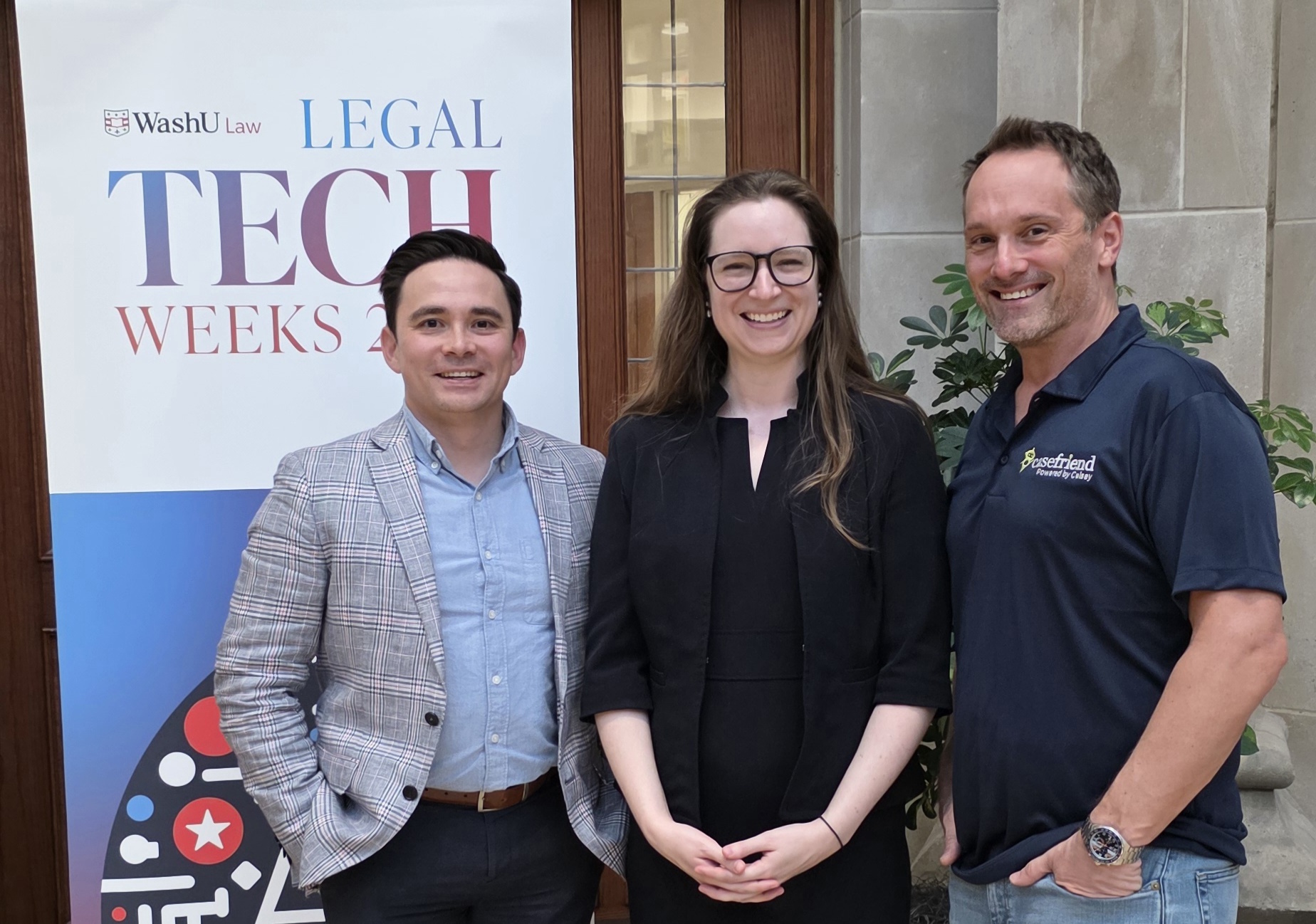
In October 2025, WashU Law hosted a forward‑looking panel discussion titled Expanding Legal Enterprise with AI, bringing together leaders in law, technology, and education to examine how AI is reshaping legal practice and the future of legal training. I had the privilege of participating alongside Professor Zoe Niesel, Adam Simon, and moderator Dean Stefanie Lindquist. Check it out here.
What emerged was a powerful message: *AI is redefining how lawyers learn, deliver value, and compete.
Why This Conversation Matters
Dean Lindquist opened the session with a reminder that the bridge between legal education and legal practice has never been more important. Law schools must work hand‑in‑hand with practitioners to prepare students for a rapidly evolving landscape.
AI is no longer speculative—it’s embedded in how discovery, drafting, analysis, and client service are performed. For today’s law students and young attorneys, technological literacy is now as fundamental as knowing how to run a search in Westlaw or Lexis.
My Perspective: Technology as a Catalyst
During the discussion, I reflected on the challenges new attorneys face as technology accelerates. Just as older generations of lawyers once struggled to transition from books to online research, many today are now adapting to AI-driven workflows. But the core opportunity remains identical: those who embrace new tools will thrive.
AI should not replace the apprenticeship model that defines great lawyering, rather it should enhance it. The early years of practice teach judgment, nuance, and strategy. These are the skills that make attorneys indispensable, even as automation drives efficiency.
How Legal Education Is Preparing the Next Generation
- Professor Zoe Niesel shared how she integrates generative tools into her course, *Drafting with Generative Tools*, focusing on:
- Understanding how the technology works
- Navigating ethical considerations
- Applying tools to real‑world legal use cases
Her goal is not to train students on one product but to develop adaptable, creative thinking around where technology adds value. This is precisely the mindset the future legal workforce needs.
Human Judgment Still Prevails
Even with rapid advancement, foundational legal skills remain critical. Both Niesel and Simon emphasized the enduring importance of writing, editing, and critical analysis. AI may accelerate the first draft, but the lawyer provides the strategy, the nuance, and the advocacy.
A Call to Action for the Legal Profession
The panel closed with a challenge: educators and practitioners must work together to ensure the next generation of lawyers not only understands emerging technologies but helps shape how they will be used across the legal profession.
At Casefriend, we see this every day. AI isn’t something lawyers need to fear—it’s a transformational advantage when used thoughtfully. Tools like **Caisey**, the only AI assistant built specifically for workers’ compensation and lien defense, prove what’s possible when AI is applied responsibly and purposefully.
AI will not replace attorneys. But attorneys who embrace AI will replace those who don’t.
If you’d like to explore how AI‑native workflows can elevate your practice, streamline your operations, and deliver better client outcomes, we’d be happy to show you what Casefriend can do.